
My thoughts about different things, questions and answers and many more from the industry...
Monday, 7 May 2012

Wednesday, 30 November 2011
What is the difference in Greenfield Development and Brownfield Development in the context of Infrastructure?
First, I would ask to what area is that infrastructure limited?
If the development is within a brownfield or a greenfield the infrastructure only has to suffer more on brownfield due to the costs of the preparatory work. On greenfield, depending on the structural technicalities of the area, it would still probably be cheaper.
If the development crosses a brownfield and a greenfield the differences are not great in terms of costs as the one will cover the other and viceversa. However, businesses and developers are often unenthusiastic about developing on brownfield sites or tend to avoid them because of the expense of clearing contaminated areas and the limitations on building growth.
The planning process is often seen by some as major stumbling block to increasing brownfield development as obtaining the necessary permissions can be delayed by negotiations over clean-up operations and other concerns.
The idea could carry on by detailing every aspect of the infrastructure in relation to brownfield vs greenfield but whatever that aspect is, the greenfield will always be the most attractive one for infrastructure or any other development.
Saturday, 5 November 2011
Consider the granite (slabs or setts) with a flamed texture. It is durable and provides enough grip for a long time. Also think about using a rigid structure with large joints. Allow for movement/expansion joints as well as the rigid structure comes with physical issues.
Porphyry setts, are another option.
I wouldn't use concrete setts even if they could provide sufficient quality (the salesman can sometimes convince you it's OK). The durability of these materials is not equalled by the aspect and resistance to wearing - especially on slopes comparing to natural stones.
Unfortunately in the end it all comes down to the budget...
 |
| Old paving still with colours... |
 |
| This is what you end up doing with concrete pavers |
How much does a fence affect the value of a home?
It is a tricky question. It might depend on the value of the house or the value of the land surrounding the house
I believe that the value of a fence in itself has nothing to do with the desired results. The design of the fence in relation with the house however has a huge impact on the value of the house. A Landscape Architect will (or should) always consider the design of the house when designing a fence. The more the design of the fence is consistent with the overall look of the landscape the higher the impact on the value of the house. As the fence has a security role more than being a design feature the latter will be affected by the designated purpose and then we can talk about the quality of the fence that is involved in the design. The type and style of the fence are mainly integrated with the overall architectural and landscape design but as I said these two scopes will be affected by the main purpose of the fence which is required by the owners of the house.
E.g. If you want to have complete privacy and high security for your house the fence will mainly be opaque and strongly built which allows for limited options for height, materials and style.
A good example:
Observe the quality and style closely related to the overall design of the house (the fence is part of the landscape) but also providing sufficient intimacy, sound protection and security as the house is close to a road:
Horizon Fence Design – Solid Fence
A bad example:
Observe that the house has been built for open views while the quality and style of the fence contradicts the purpose of the overall design:
It is a tricky question. It might depend on the value of the house or the value of the land surrounding the house
I believe that the value of a fence in itself has nothing to do with the desired results. The design of the fence in relation with the house however has a huge impact on the value of the house. A Landscape Architect will (or should) always consider the design of the house when designing a fence. The more the design of the fence is consistent with the overall look of the landscape the higher the impact on the value of the house. As the fence has a security role more than being a design feature the latter will be affected by the designated purpose and then we can talk about the quality of the fence that is involved in the design. The type and style of the fence are mainly integrated with the overall architectural and landscape design but as I said these two scopes will be affected by the main purpose of the fence which is required by the owners of the house.
E.g. If you want to have complete privacy and high security for your house the fence will mainly be opaque and strongly built which allows for limited options for height, materials and style.
A good example:
Observe the quality and style closely related to the overall design of the house (the fence is part of the landscape) but also providing sufficient intimacy, sound protection and security as the house is close to a road:
Horizon Fence Design – Solid Fence
 |
| The Good example |
A bad example:
Observe that the house has been built for open views while the quality and style of the fence contradicts the purpose of the overall design:
 |
| The bad example |
How often should you provide landscaping services?
How often should you provide landscaping services to your rental property?
The answers for this question can be very ample.
What size is the property? Is it about maintenance, regeneration/restoration or it is just about the seasonal look? What type of landscape and what level of ornamental planting is there? What are the proportions of the soft and hard areas? What is the level of access and traffic within the space? What is the purpose of the building? What type of activities are taking place and what age groups use the space?
...and the questions could go on... but the most important one is: How much money are you willing to allocate for this purpose?
From the landscape management point of view a sufficient service sould be provided in order to at least preserve the existing look of the place. The level of service has a direct impact on the value of the property. Through landscaping services it is imperative to minimise the negative impact on the property and therefore the budget should be determined by the amount of work necessary to at least maintain the same level of financial value of the property. Anything less than that should not be considered by the contractor as a contract and should be paid on a ''pay per visit'' plan. Always, examples of negative landscaping services are blamed on the contractor when the budget cannot cover the requirements for a minimum standard look of the place.

The answers for this question can be very ample.
What size is the property? Is it about maintenance, regeneration/restoration or it is just about the seasonal look? What type of landscape and what level of ornamental planting is there? What are the proportions of the soft and hard areas? What is the level of access and traffic within the space? What is the purpose of the building? What type of activities are taking place and what age groups use the space?
...and the questions could go on... but the most important one is: How much money are you willing to allocate for this purpose?
From the landscape management point of view a sufficient service sould be provided in order to at least preserve the existing look of the place. The level of service has a direct impact on the value of the property. Through landscaping services it is imperative to minimise the negative impact on the property and therefore the budget should be determined by the amount of work necessary to at least maintain the same level of financial value of the property. Anything less than that should not be considered by the contractor as a contract and should be paid on a ''pay per visit'' plan. Always, examples of negative landscaping services are blamed on the contractor when the budget cannot cover the requirements for a minimum standard look of the place.

Why so much Anti Social Behaviour in our Parks?
Why so much Anti Social Behaviour in our Parks?
From my experience I can say the public parks are less used because of the poor design input (by unqualified people in key posts, responsible for greenspace developments) and the lack of professionals.
I could say the first reason is caused by the second and the second is caused by the technical difficulties which are involved in a Landscape Architecture course. People nowadays want everything easy and smooth, effortless and rewarding. On top of all this is the income of a Landscape Architect compared to other similar professionals whom sometimes have easier jobs, less responsible and definitely less difficult.
ASB is an issue now and it always has been. It's only the perception that increased due to more publicity for any event happening in a community. Skaters are seen as threats, teenagers generally are perceived and confused with ASB. The elderly complain more because of the council's policies, etc...
Unless a park is built having all these "issues" in mind the problem will always be the same.
From the same personal experience open views and a good segregation of the space to accommodate the varieties of the outdoor activities are a guaranteed success for a new park or for reshaping an old one.
ASBs only happen in parks where people are not attracted to spend time within. Crime happens in spaces where people of all ages and categories can't spend time together. So create those spaces for them, bring interest to the park and people will come, park will be used.

What is Anti Social Behaviour? (ASB)
From my experience I can say the public parks are less used because of the poor design input (by unqualified people in key posts, responsible for greenspace developments) and the lack of professionals.
I could say the first reason is caused by the second and the second is caused by the technical difficulties which are involved in a Landscape Architecture course. People nowadays want everything easy and smooth, effortless and rewarding. On top of all this is the income of a Landscape Architect compared to other similar professionals whom sometimes have easier jobs, less responsible and definitely less difficult.
ASB is an issue now and it always has been. It's only the perception that increased due to more publicity for any event happening in a community. Skaters are seen as threats, teenagers generally are perceived and confused with ASB. The elderly complain more because of the council's policies, etc...
Unless a park is built having all these "issues" in mind the problem will always be the same.
From the same personal experience open views and a good segregation of the space to accommodate the varieties of the outdoor activities are a guaranteed success for a new park or for reshaping an old one.
ASBs only happen in parks where people are not attracted to spend time within. Crime happens in spaces where people of all ages and categories can't spend time together. So create those spaces for them, bring interest to the park and people will come, park will be used.

What is Anti Social Behaviour? (ASB)
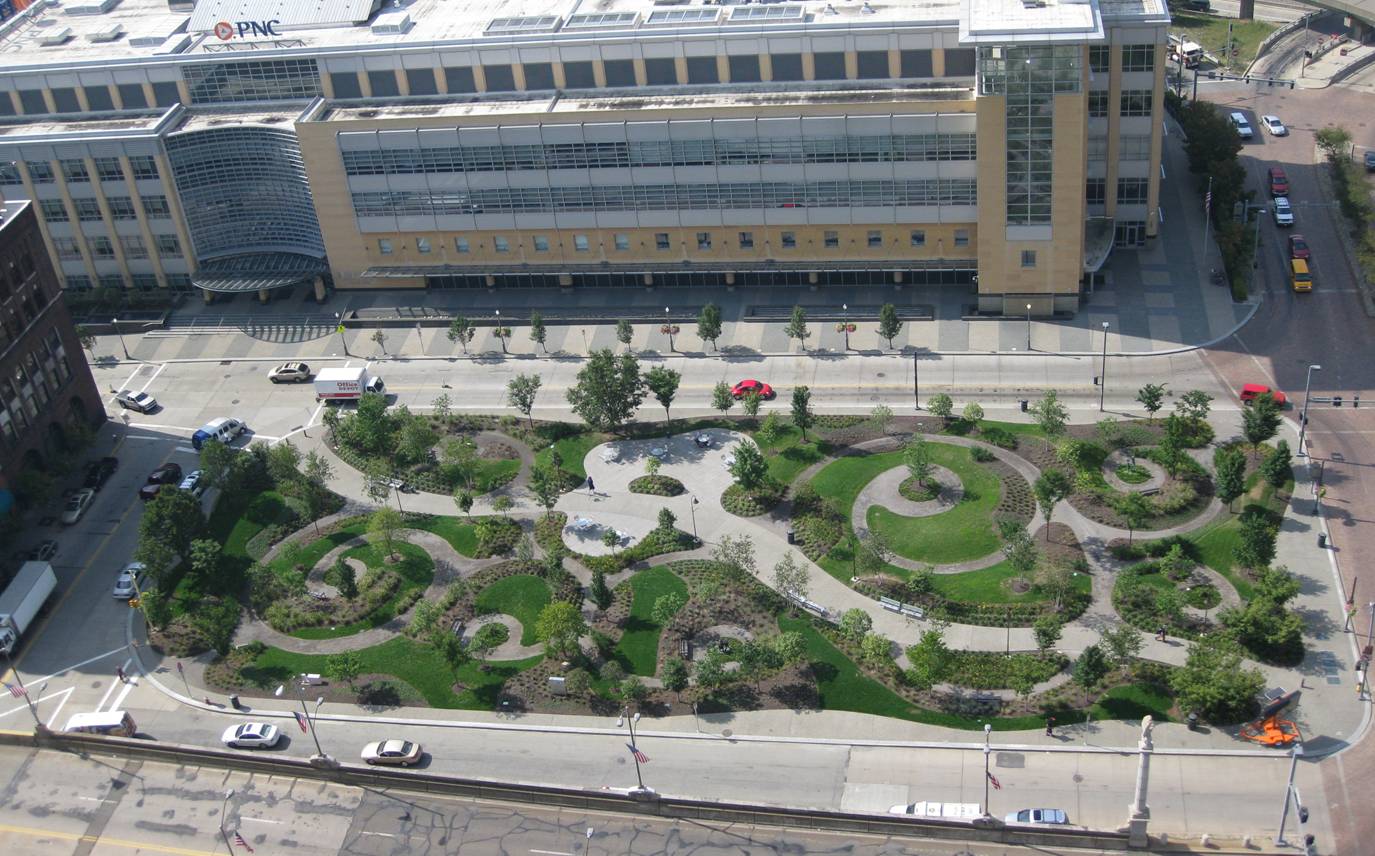
Urban design and antisocial behaviour
 |
| A place with no ABSs |
Friday, 4 November 2011
Frederick Law Olmsted, founder of American landscape architecture.
 |
| Frederick Law Olmsted, founder of American landscape architecture. |
Colleges and Universities are Frederick Law Olmsted and associates known to have contributed to:
He's known to have contributed to the following institutions:
- American University Main Campus, Washington, DC.
- Auburn University Main Campus, Auburn, Alabama
- Berwick Academy, South Berwick, Maine (1894)
- Bryn Mawr College, Bryn Mawr, Pennsylvania (1885)
- Colgate University, Lower grounds, Hamilton, New York (state)
- Colorado State University, Fort Collins, CO, Colorado
- Cornell University, Ithaca, NY, New York (1867–73)
- Denison University, Granville, Ohio
- Fairleigh Dickinson University, Madison, NJ, New Jersey
- Gallaudet University, Washington, D.C. (1866)
- The Groton School, Groton, Massachusetts
- Grove City College, Grove City, Pennsylvania
- Lawrenceville School, Lawrenceville, NJ, New Jersey (1883–1901)
- Manhattanville College, Purchase, New York
- Miami University (OH), Oxford, Ohio (1912)
- Michigan State University, East Lansing, MI, Michigan
- Middlesex University, Concord, MA, Massachusetts
- Mount Holyoke College, South Hadley, Massachusetts
- Noble and Greenough School, Dedham, Massachusetts
- Oregon State University, Corvallis, OR, Oregon (1890s)
- Phillips Academy (Andover, MA), Massachusetts (1891–1965)
- Pomfret School, Pomfret, Connecticut
- St. Albans School (Washington, D.C.)
- Smith College, Northampton, MA, Massachusetts (1891–1909)
- St. Joseph Hill Academy, Staten Island, NY, New York
- Stanford University, Palo Alto, California, master plan (1886–1914)
- Trinity College (Hartford, CT), Hartford, CT, Connecticut (1872–94)
- University of California, UC Berkeley, Berkeley, CA, California, master plan (1865)
- University of Chicago, Chicago, Illinois
- University of Rochester, Rochester, New York
- Washington University in St. Louis, Missouri (1865–99)
- Wellesley College, Wellesley, Massachusetts
- Yale University, New Haven, CT, Connecticut (1874–81)
Source: http://en.wikipedia.org/w


How many council workers do we need?
How many council workers...
As a Landscape Architect employed by the Council, you have to get the design proposals through different stages: department manager, unit manager, other departments (transportation, planning, etc), councillors, executives and so on... before the public gets involved, which is a completely different matter. I was wondering how many of these non-professional bodies try to influence the design from a personal point of view arguing with their position in the decision making process, even if the project is perfectly eligible from every point of view. It is only happening because they have personal ideas and opinions that have nothing to do with the principles and knowledge about landscape architecture but they are excited about these kind of projects and want to impose changes because of their position... On the other hand if something goes wrong, they would not accept any responsibilities after the landscape architect was ''forced'' to adopt their ideas...

As a Landscape Architect employed by the Council, you have to get the design proposals through different stages: department manager, unit manager, other departments (transportation, planning, etc), councillors, executives and so on... before the public gets involved, which is a completely different matter. I was wondering how many of these non-professional bodies try to influence the design from a personal point of view arguing with their position in the decision making process, even if the project is perfectly eligible from every point of view. It is only happening because they have personal ideas and opinions that have nothing to do with the principles and knowledge about landscape architecture but they are excited about these kind of projects and want to impose changes because of their position... On the other hand if something goes wrong, they would not accept any responsibilities after the landscape architect was ''forced'' to adopt their ideas...
Sunday, 9 October 2011
Building new or reconstructing the old?
I came across many projects that had some bad input from the public, which makes me think if the public likes changes... I'm 90% sure they don't.


Subscribe to:
Comments (Atom)